
MUC Artists
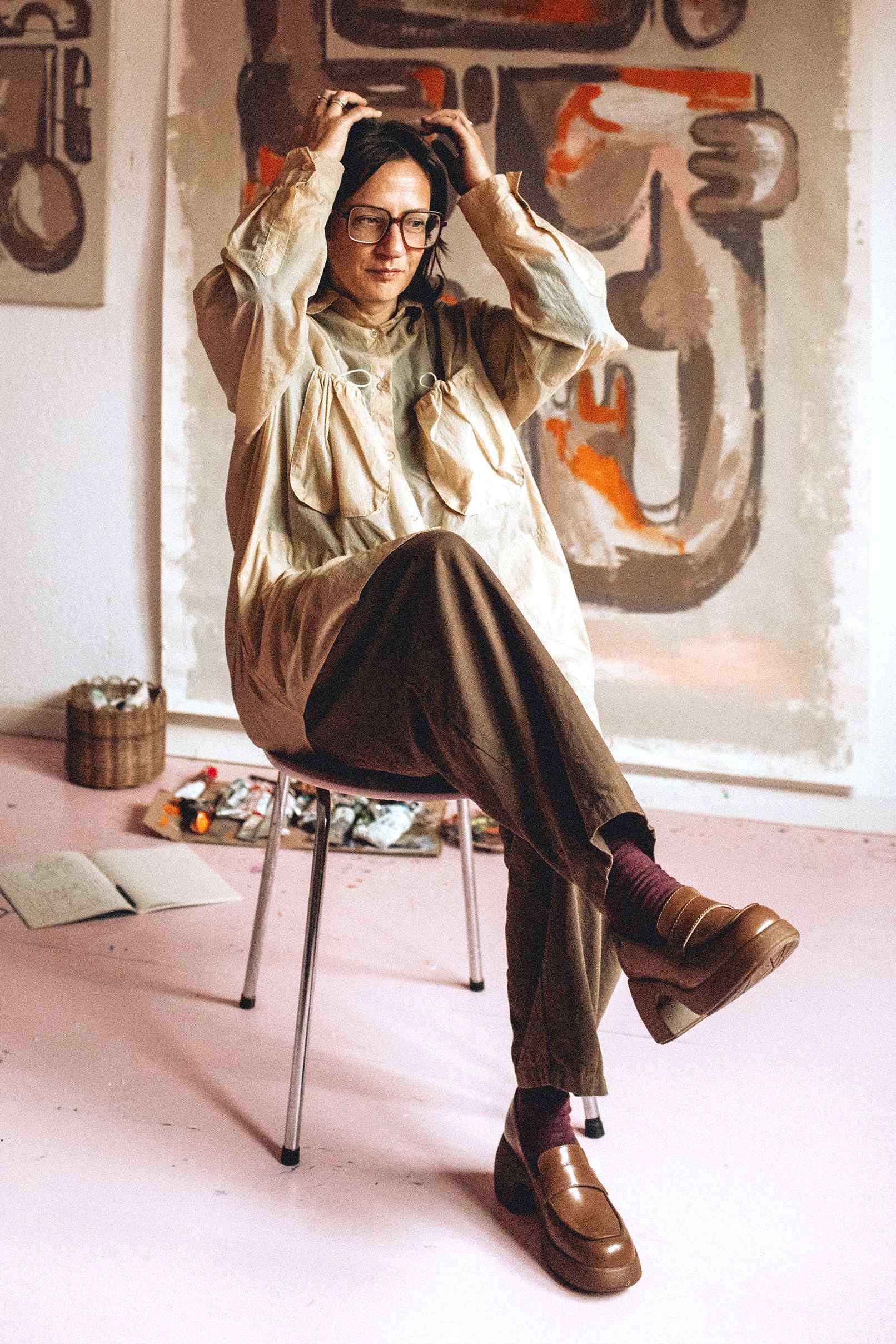
Mara Weyel
Onboarding room
Mara Weyel is a versatile graphic designer and artist from Augsburg. Her creative approach goes far beyond design alone: through the careful selection of colors, shapes, images, illustrations, and typefaces, she tells compelling visual stories. Her broad range of expertise includes typography, corporate identity development, web design, and animation. Together with the graphic design agency KW NEUN, she won numerous prestigious awards, including the TDC Type Directors Club Award, European Design Awards, Red Dot Design Award, iF Communication Design Award, and the award for the 100 best posters. At the WOW Museum, the onboarding room she designed guides visitors through their first steps in the museum.

Pfeifer & Kreutzer
Inversion
The artist duo Pfeifer & Kreutzer, consisting of Anne Pfeifer and Bernhard Kreutzer, lives and works in Munich and Reichelsheim in the Odenwald. Their work focuses on kinetic art in the form of moving objects, sound installations, and video works. They work with a variety of materials, such as acrylic glass, faux fur, wood, and metal. Their works mostly consist of geometric, minimalist forms in bold colors. The duo has already been honored with numerous awards and grants, including a three-month artist residency in Gwangju, South Korea. One of their works, Inversion, can be admired at the WOW Museum in Munich.

Tobias Ziegler
Frozen
Tobias Ziegler lives and works in Berlin. In his artistic practice, he focuses on how the perception of physical space is altered by the interplay of new media such as light. The multimodal installations that emerge from this approach challenge viewers to explore the limits of their perception. This is also the case with the space he curated, Frozen, at the WOW Museum in Munich. With his award-winning works, he has participated in numerous international exhibitions in Montreal, Leipzig, Weimar, and Karlsruhe, as well as at the Luminale in Frankfurt am Main in 2020.

Carnovsky
Wonder Tunnel
Carnovsky is an art and design duo based in Milan, consisting of Francesco Rugi and Silvia Quintanilla. The duo is known for its use of a unique technique, which they introduced in 2010 with their RGB wallpaper. This wallpaper displays different images under varying lighting conditions by interacting with light colors. Carnovsky’s ongoing project using RGB technology explores the possibilities of interaction between printed colors and light colors, resulting in unexpected and bewildering images. Their work is exhibited internationally, including in Berlin, Paris, London, and Melbourne. One of their works, the Wonder Tunnel, is also on display at the WOW Museum in Munich.
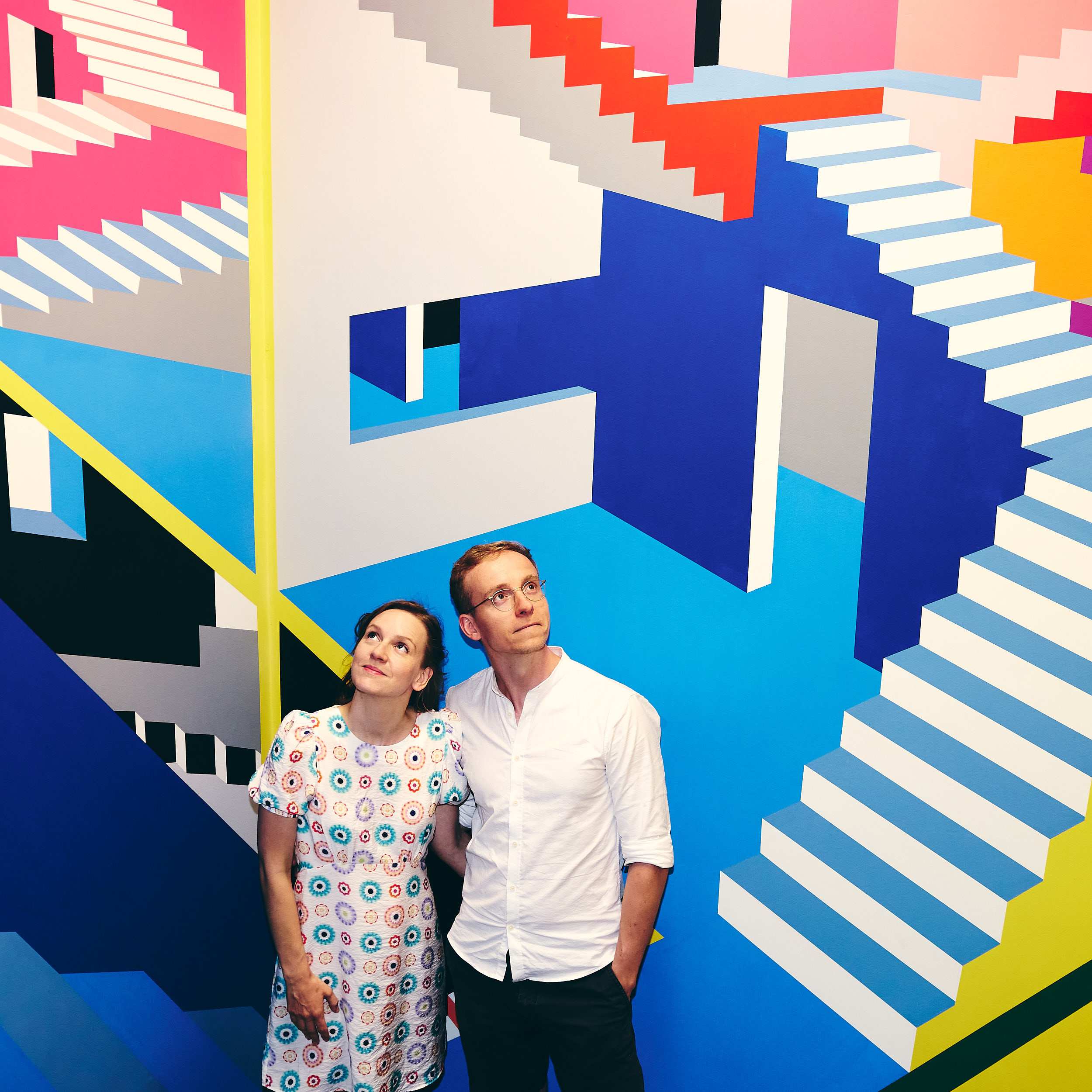
Studio Zahel
Perpetual
Studio Zahel brings together the perspectives of Esther and Peter Zahel. Esther Zahel explores the possibilities of how painting, as a classical medium, can be transferred from the two-dimensional surface into three-dimensional space. Her goal is to create an immersive experience. Peter Zahel, on the other hand, focuses on architectural photography, examining materiality, ergonomics, and form. One of his areas of focus is also always the reflection on social, aesthetic, and metaphysical connections. Together, they designed the stairwell of the WOW Museum. The wall painting was created by Esther Zahel.
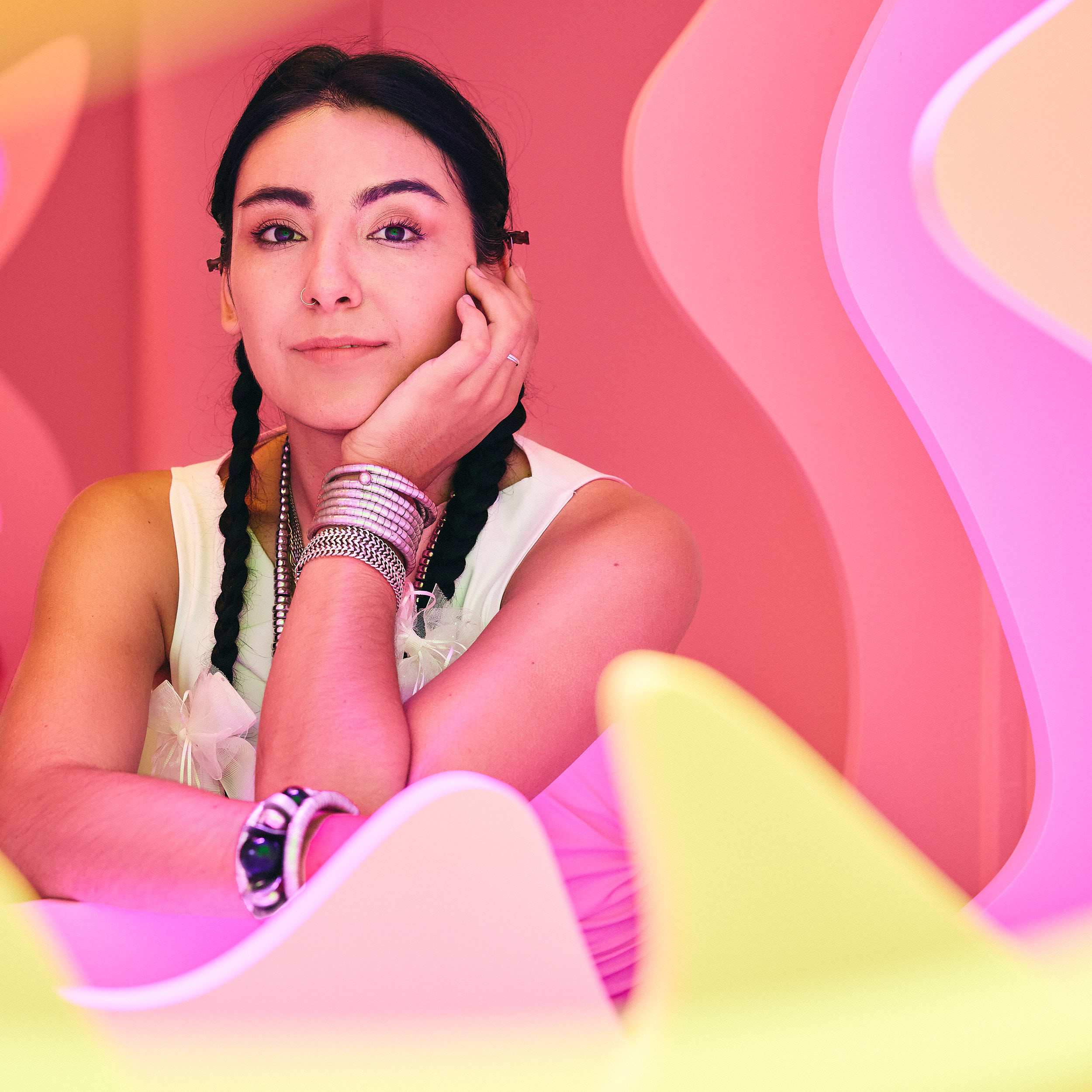
Nadja Lola Crosina Caballero
Morph
Nadja Lola Crosina Caballero is a Swiss-Mexican artist known for her striking set designs and the creation of magical worlds. Lola stages people, objects, and spaces in theatrical settings that transport viewers into another reality. Her multicultural background lends her work energy and vibrancy. Lola’s works are featured at the WOW Museum in Zurich, the WOW Museum in Munich, and the NoNation Gallery in Chicago. As a set designer, she has worked for brands such as Zalando and Alnatura, and her photographs have been published in Faces and Kaltblut magazines.

Felix Rodewaldt
Vector
Felix Rodewaldt lives and works in Munich. Whether creating tape art or wall paintings, Rodewaldt views the interior and exterior architecture of the 21st century as his very own canvas. Inspired by street art techniques, he transforms walls and surfaces in public spaces. Tape art—art created using adhesive tape—is a central focus of his artistic practice. Through numerous commissioned works, he has already left a visible mark in various cities, such as Munich, Berlin, Chemnitz, and Vienna, as well as at the WOW Museum in Munich, where he designed the Vector room. He has also participated in international exhibitions in Tokyo, New York, and Odessa.

Robin Baumgarten
Quantum Jungle
Robin Baumgarten is a hardware game designer and artist specializing in interactive installations, based in Berlin. His projects combine art, design, and technology. Through his studio, Wobbly Labs, he develops interactive installations that make complex systems tangible, often with a focus on perception and physical processes. A central element of his work is the use of play as a tool for understanding. You learn through trial and error, through mistakes, through repetition. His works demonstrate that what you see emerges in the moment of interaction. Projects such as Line Wobbler and Quantum Jungle have been exhibited worldwide, including at the Victoria & Albert Museum in London, the ZKM in Karlsruhe, the Tokyo Game Show, and the Toronto International Film Festival. Quantum Jungle is currently on view at the WOW Museum in Munich.
This experience at the WOW Museum in Munich was made possible thanks to the support of our partners.

Agentur Aroma
Interior Design & Storytelling
The Zurich-based agency Aroma is one of the leading specialists in spatial brand experiences. For the WOW Museum, Aroma developed the spatial concept, transformed illusions into a walk-through world of experiences and created a cohesive overall vision that blends architecture, storytelling, and design. Aroma takes a holistic approach—from the initial idea to the final detail—and seamlessly integrates experience, emotion, and brand.
–naut
Motion Design & AR
When ideas break boundaries, Switzerland’s leading agencies call on –naut. For decades, –naut has been designing sophisticated interactive spaces. Their portfolio ranges from simple to premium visitor experiences, complemented by workflows that make collaboration efficient and transparent. –naut developed the digital animations and augmented reality content for the WOW Museum. The immersive effects reveal hidden elements and enhance the illusions in a playful way.

Ramon De Marco Idee & Klang, Basel
Sound design
Basel-based sound designer Ramon De Marco of the studio Idee & Klang Audio Design composed the acoustic elements in the museum—including the seemingly endless scale in the installation ‘Perpetual’. His work creates emotional spaces through precisely crafted sound architecture. Idee & Klang specializes in multidimensional sound design for museums, brand spaces, and public venues worldwide.

LEGO®
Cooperation
A special highlight at the WOW Museum is its partnership with LEGO®, which is on display in the museum’s family area. There, visitors can build their own optical illusions using real LEGO® bricks and experience how perspective, structure, and imagination can have a big impact even on a small scale. The LEGO® station invites visitors to get hands-on and learn through play—for children and adults alike.

ITFOUR
Hardware and technology in the museum
ITFOUR, a solutions and systems provider, is a service provider with many years of experience in workplace equipment, software, and telecommunications solutions. At the WOW Museum in Munich, they not only set up and installed the network infrastructure, including Wi-Fi, but also equipped the museum with LED installations, video surveillance, and MQTT control systems. They continue to support the project with service and maintenance.
Do you have any questions?
We've got answers! Browse through our frequently asked questions to find the information you need.